Key Takeaways
- Dental anxiety affects approximately 36% of adults and is rooted in physiology, not personality, and not weakness.
- Environmental factors like lighting, noise, and perceived time pressure directly influence cortisol levels before you ever sit in the chair.
- Modern anesthetic techniques, including buffered anesthesia, can eliminate injection discomfort at its chemical source — not just minimize it.
- A genuinely anxiety-friendly dental practice is designed differently from the ground up. There are specific questions you can ask to tell the difference before you book.
If you’ve been quietly postponing dental care — not because you don’t know you need it, but because no amount of reassurance has made the idea feel okay — you’re not alone, and you’re not being irrational.
Here’s what actually helps: not more encouragement. More information. Specifically, information about what modern dental care can do differently at the clinical level when a practice is designed around anxious patients rather than around throughput.
If every soft reassurance you’ve heard before hasn’t worked, you may need less reassurance and more evidence. That’s what this article is.
Why Dental Anxiety Is Physiological, Not a Personality Flaw
Before anything else: what you feel in a dental chair isn’t weakness. It’s biology.
When your brain registers a potential threat — a needle, an unfamiliar sound, even the particular smell of a dental office — your body activates its hardwired threat-response system. Cortisol and adrenaline release. Muscles tighten. Heart rate climbs. This is the same response that kept your ancestors alive. It doesn’t care that you’re in a climate-controlled office in Beverly Hills.
According to the Cleveland Clinic, approximately 36% of the population experiences dental anxiety, with an additional 12% reporting extreme dental fear — what clinicians classify as dentophobia. The distinction matters: dental anxiety exists on a spectrum. Most people who describe themselves as “bad at the dentist” are experiencing a completely normal physiological response to a high-sensory, low-control environment. That’s not a character flaw. That’s data.
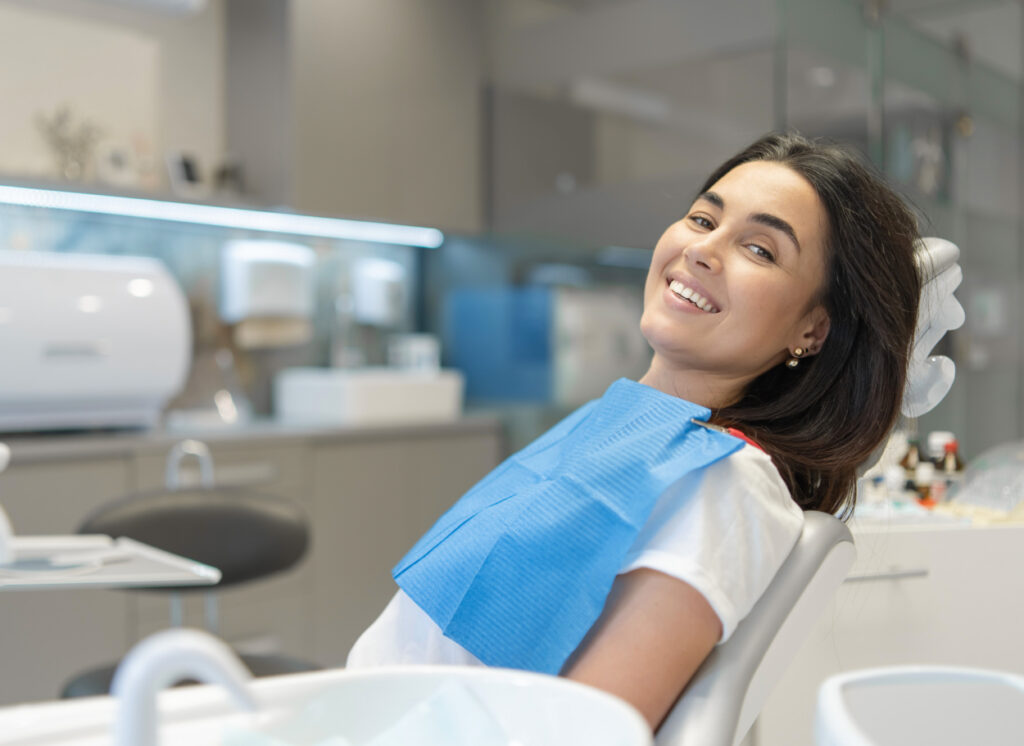
What makes the dental setting particularly activating is the convergence of factors that trigger threat response: a reclined position that signals vulnerability, another person in close proximity to your face, unfamiliar sounds and smells, and — critically — limited ability to communicate once a procedure begins. Your nervous system was never going to find this comfortable by default.
The good news: that same system is also highly responsive to environmental and procedural cues that signal safety. Which is exactly where modern dentistry has made real and measurable progress.
How an Unhurried Environment Actually Lowers Your Cortisol
Most dental offices are designed for efficiency. Appointment slots are tight. Transitions between rooms are quick. Patients often feel — correctly — that the pace is set by the schedule, not by them.
That design is a cortisol generator. Research on stress response in clinical settings consistently shows that perceived loss of control and time pressure are primary drivers of patient anxiety — independent of the procedure itself. (Citation: NCBI/PubMed — cortisol stress response in dental settings — editor: confirm specific study)
At a practice built for anxious patients, the environment is a treatment tool. That means:
- A calm, clean reception area where wait time is predictable and respected — because uncertainty activates threat response before the appointment even begins
- No rushed transitions between rooms or abrupt starts to procedures
- Warm, considered lighting and ambient acoustics rather than clinical-cold fluorescents that amplify an already high sensory load
- Step-by-step narration throughout — your provider explains what’s happening before it happens, every time, so nothing becomes a surprise
The phrase we hear most often from patients who’ve been avoiding the dentist for years is some version of: “I just didn’t feel in control.” The unhurried environment is what gives that control back — not symbolically, but neurologically. When your brain receives consistent signals that the pace is yours to set, cortisol levels measurably decline over the course of the appointment.
“Patients often tell us they used to dislike dental visits — but that our team has changed their view.” That shift rarely happens because of any single technique. It happens because the entire experience is designed around you, from the first phone call to the last goodbye.
The Gentle Techniques Modern Dentistry Uses That Most Patients Don’t Know About
This is the section most dental content never reaches — not because the information is hidden, but because most practices aren’t using these techniques, and most content isn’t written by clinicians who do.
Buffered Anesthesia: Why the Injection Doesn’t Have to Sting
Standard lidocaine — the most widely used dental anesthetic — has an acidic pH of approximately 3.5 to 4.5. (Citation: NCBI/PubMed or Malamed’s Handbook of Local Anesthesia — editor: confirm) When it’s injected into tissue, that acidity is the primary cause of the burning sensation most patients associate with “the shot.” It is not the needle. It is the chemistry.
Buffered anesthesia addresses this directly. By mixing lidocaine with a measured amount of sodium bicarbonate immediately before injection, the pH is neutralized to approach the body’s natural tissue pH of approximately 7.4. The result, as used in our practice, is an injection that is significantly more comfortable — often described by patients as barely perceptible.
This is not a comfort gimmick. It’s a precision pharmacological adjustment that most patients have never been offered, because not every practice takes the time to do it.
Minimally Invasive Approaches: Less Drilling, Less Recovery, Less Fear
Much of what patients fear about dental procedures isn’t pain — it’s sensory overwhelm. The vibration of a drill. The heat. The sound. Minimally invasive dentistry reduces all three.
- Laser-assisted procedures, when appropriate for your specific treatment, eliminate both vibration and heat — two of the primary sensory triggers of dental anxiety. For soft tissue work and certain cavity treatments, lasers allow for precise care without the physical sensations that activate threat response.
- Air abrasion offers an alternative to traditional drilling for smaller cavities — using a fine stream of particles rather than rotary instruments, with significantly less noise and sensation.
- Articaine, an anesthetic option your dentist will evaluate based on your individual medical history and treatment needs, has higher lipid solubility than standard lidocaine — meaning it penetrates nerve tissue more effectively and may achieve deeper numbing with less volume. For patients who’ve experienced the unsettling sensation of feeling “not quite numb enough,” this is frequently the clinical explanation no one has given them before.
[
Ready to experience this for yourself? Our Beverly Hills team is accepting new patients — and we’d genuinely love the opportunity to change your view of the dentist. We offer sedation options we offer for anxious patients and build every appointment around your comfort level, not our schedule.
What a Gentle Dental Appointment Actually Looks Like, Step by Step
Knowing the techniques matters. So does understanding how a visit actually unfolds at a practice built for anxious patients — because for many people, the anticipation is harder than the appointment itself.
From the first phone call, our team invites you to share your anxiety level and any past experiences that felt difficult. That information shapes how your appointment is structured before you arrive. You won’t be explaining your concerns from scratch once you’re already in the chair.
In the operatory, we operate on a communication-first model. Every step is narrated before it begins. If at any point you need to pause, signal, or ask a question, there is a clear, agreed-upon way to do that. You are always in charge of the pace.
Dr. Lavi and Dr. Jabaiti approach anxious patients with the same foundational principle: precision and patience are not in conflict. Clinical excellence does not require rushing. In practice, it requires the opposite — the time and attention to do things exactly right, with a patient who feels informed, empowered, and valued at every step. That’s not marketing language. It’s the standard our team holds itself to.
How to Know If a Dentist Is Actually Anxiety-Friendly (Not Just Claiming to Be)
“We accommodate anxious patients” appears on nearly every dental website. Here’s how to find out whether a practice actually means it — before you commit to an appointment.
Ask these four questions before you book:
- “Do you offer buffered anesthesia or modified anesthetic protocols for sensitive patients?” A practice that does will know immediately what you’re asking. One that doesn’t may not.
- “Can I speak with someone about my anxiety before my first appointment?” Anxiety-friendly practices build this into intake. Others treat it as an afterthought.
- “What’s your policy if I need to pause or take a break during treatment?” There should be a clear, practiced answer. “We’ll figure it out” is not a system.
- “Do you offer sedation options for anxious patients, and how is eligibility determined?” Sedation options are individualized and discussed during a consultation based on your complete medical history. A practice worth trusting will say exactly that — not overpromise outcomes.
Green flags: Named, credentialed doctors, detailed patient communication built into the intake process, staff who actively invite questions about anxiety, and review language that specifically references comfort, patience, and changed perceptions of dental care.
Red flag: Any practice that responds to your anxiety with “don’t worry, it’ll be fine” — and nothing else.
What To Do Next
Dental anxiety isn’t something to push through on willpower alone. It’s something to solve — by finding a practice that’s actually designed to make a calm, comfortable visit possible.
The clinical tools exist. Buffered anesthesia. Minimally invasive techniques. Unhurried protocols built around patient pacing. A team that treats your comfort as a clinical priority, not an inconvenience. In Beverly Hills, you hold a high standard for every other health and wellness experience in your life — your internist, your trainer, your aesthetician. That standard belongs at the dentist, too.
This isn’t about being brave. It’s about finding the right practice. And once you have, you may find that routine dental care in a comfortable environment feels nothing like what you’ve been dreading.
Schedule Your First Visit with the Dental Group of Beverly Hills
Discover what anxiety-free dental care actually feels like — from the first phone call to the last goodbye.
Our team, led by Dr. Nuriel Lavi, DDS, and Dr. Tariq Jabaiti, DDS, Faculty Professor at the USC Herman Ostrow School of Dentistry, brings together the warmth, precision, and patient-first philosophy that Beverly Hills patients deserve. We are currently welcoming new patients.
Schedule your anxiety-free consultation in Beverly Hills →
Prefer to talk first? Call us directly. We’ll walk you through everything before you decide.
This content is for informational purposes only and does not constitute medical or dental advice. Please consult with a qualified dental professional for guidance specific to your health needs. Sedation options are individualized and discussed with your dentist during a consultation; eligibility depends on your medical history.
FAQ
Q: What is the difference between dental anxiety and dental phobia?
Dental anxiety and dental phobia both involve fear related to dental visits, but they differ in intensity and functional impact. Dental anxiety — experienced by approximately 36% of adults — is a common stress response that may show up as nervousness, tension, or habitual avoidance. Dental phobia (clinically, dentophobia) is a more severe and persistent fear that can cause significant distress or complete avoidance of dental care, even when health is at stake. Both exist on a spectrum, and both are recognized physiological and psychological responses — not character failings. If your avoidance is meaningfully affecting your oral health, discussing this directly with a dental professional is the most appropriate first step.
Q: Does nitrous oxide really help with dental anxiety, and is it safe?
Nitrous oxide — commonly called laughing gas — is one of the most widely studied sedation options in dentistry. It induces a mild, relaxed state while keeping you conscious and able to respond to your provider throughout the procedure. Effects begin quickly and resolve within minutes of stopping administration, which allows most appropriate candidates to drive themselves home afterward. Nitrous oxide has a well-established safety profile; however, sedation options are individualized and require a consultation that includes a full review of your medical history. Your dentist will determine whether it’s appropriate for your specific situation and treatment.
Q: How do I prepare for a dental visit if I have severe anxiety?
The most effective preparation begins before you arrive. Call the practice in advance and specifically share your anxiety level — a genuinely anxiety-friendly office will adjust your intake process, appointment pacing, and communication approach based on that information. If you have specific triggers from past experiences, name them. Ask about available anesthetic comfort options and whether any sedation options may be worth discussing during a consultation. Arriving a few minutes early — rather than rushing from another commitment — also gives your nervous system time to register that the environment is calm before the clinical portion of your visit begins.
 Root Canal vs. Filling: The Exact Clinical Criteria Your Beverly Hills Dentist Uses to Decide