
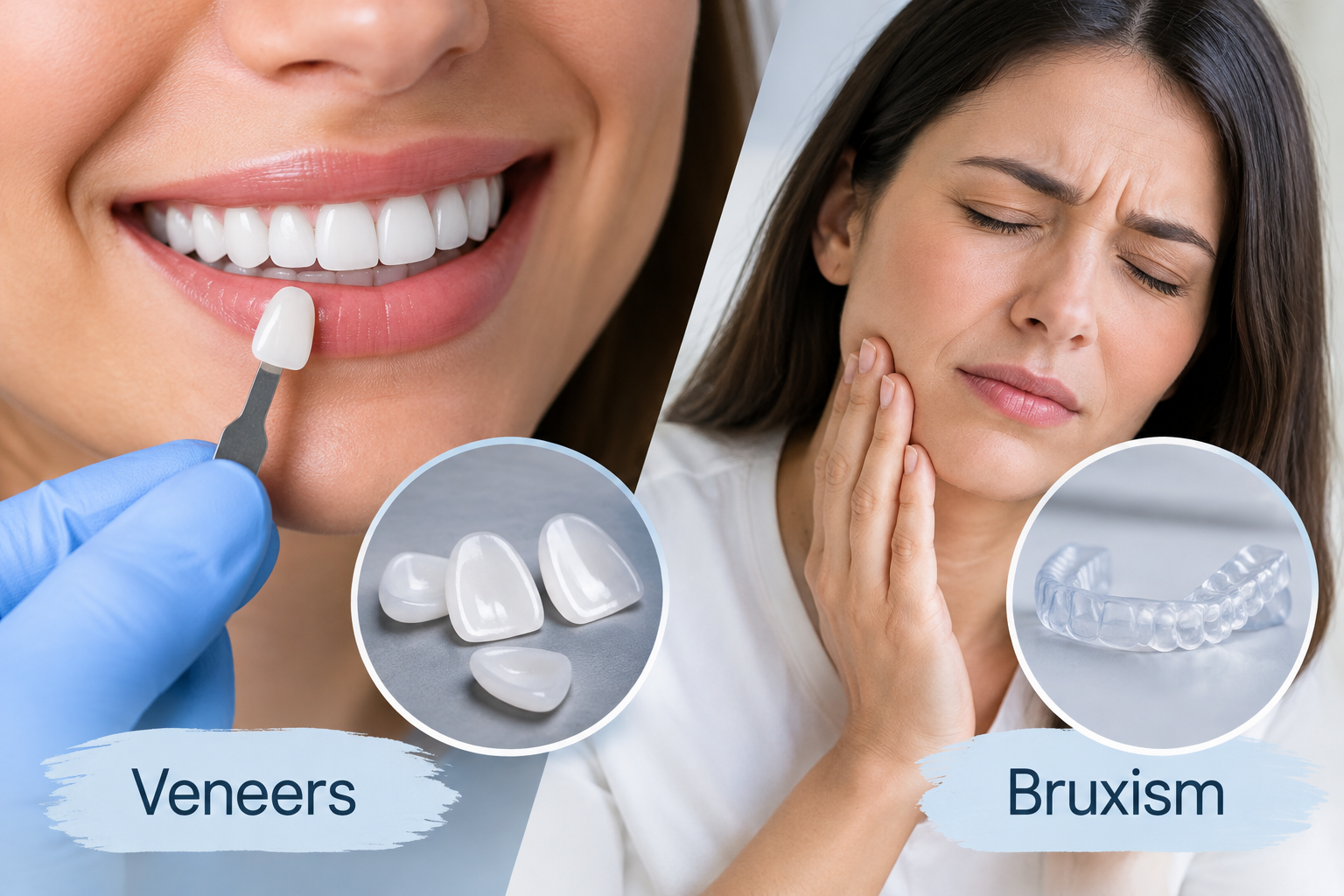
If you grind or clench your teeth and you want veneers, you have probably been told one of two things. Either that veneers are off the table for you, or that a particular brand is unbreakable.
Both answers skip the part that matters. Material choice is one factor in whether a cosmetic result survives a grinding habit. Bite design and control of the grinding itself are the other two, and they carry at least as much weight.
Here is how the pieces fit together, so you can have a genuinely useful conversation with your cosmetic dentist.
Start here: veneers do not treat bruxism
This is the single most important idea on this page.
Bruxism is a parafunctional habit, meaning your jaw muscles are working when they should be resting. It happens during sleep for some people and during waking hours for others, often tied to concentration or stress.
Porcelain placed over teeth that are being ground does not stop the grinding. The forces continue, and they land on the new restorations. If bruxism is not identified and managed first, even excellent veneers are working against a headwind.
So the sequence matters. Diagnose, manage, then restore.
How bruxism gets identified
Your dentist is looking for a pattern, not a single sign:
- Flattened, polished wear facets on the biting edges that match up when you slide your jaw.
- Chipped enamel or repeated fractures of existing fillings and crowns.
- Jaw muscle soreness or headaches, often worst in the morning.
- Sensitivity from exposed dentin where enamel has worn through.
- Scalloped indentations along the sides of the tongue or ridging inside the cheeks.
- A partner who has heard the grinding.
Sleep-related bruxism sometimes travels alongside sleep-disordered breathing. If your history suggests that, a medical sleep evaluation may be recommended before cosmetic work begins. That referral is a sign of thoroughness, not a delay tactic.
The material options, honestly compared
Feldspathic porcelain. The traditional layered porcelain veneer. Beautiful, thin, and the most lifelike in the hands of a skilled ceramist. It is also the least fracture-resistant of the common options, which makes it a harder recommendation for an active grinder.
Pressed lithium disilicate. Often referred to by the brand name e.max. This is a strong glass-ceramic that bonds reliably to enamel and offers excellent esthetics. For many patients with a controlled grinding habit, lithium disilicate bonded to enamel is a commonly recommended combination, though suitability depends on your individual bite and how much enamel remains.
Zirconia. The strongest of the tooth-colored ceramics. Highly translucent modern zirconia has closed much of the old esthetic gap. In heavy-force cases, some clinicians favor zirconia, sometimes as a full-coverage crown rather than a veneer. One consideration is that zirconia must be well polished or glazed, because a rough ceramic surface can wear the opposing natural teeth.
Composite veneers. Direct bonded resin applied in the chair. Less expensive, less invasive, and repairable when they chip. Composite stains and wears faster than ceramic. For an active grinder who is still getting the habit under control, composite can be a sensible interim option that preserves the ability to change course later.
No material is simply best for everyone with bruxism. The right answer depends on how much enamel you have left, how heavy your forces are, where the veneers sit in your bite, and whether the grinding is being managed.
Design matters as much as material
Two identical sets of veneers can behave completely differently depending on how they were planned. These are the factors an experienced cosmetic dentist is thinking about:
Bonding to enamel wherever possible. Adhesion to enamel is stronger and more durable than adhesion to dentin. A patient with significant wear may have less enamel left, which changes the plan. This is one reason acting earlier tends to give you better options.
Preparation design. Conservative preparation preserves strength. Over-reducing the tooth to accommodate thick porcelain trades away the very structure that supports it.
Where the contacts land. Veneer margins placed directly in a heavy functional contact are asking for trouble. Moving those contacts onto natural tooth structure or redesigning the guidance can substantially reduce stress on the restorations.
Canine guidance and the overall bite scheme. How your teeth separate when you move your jaw sideways determines which teeth absorb lateral force. Getting this right protects front veneers.
Digital planning and a trial run. A digital scan and a mock-up let you see and, in some cases, test-drive the proposed shape before anything permanent happens.
The nightguard is not optional
If you have a diagnosed grinding habit and you invest in veneers, a custom occlusal guard is part of the treatment, not an upsell afterward.
A properly fitted guard made from an accurate impression or digital scan distributes force and gives the porcelain something else to take the hit. Over-the-counter boil-and-bite guards fit poorly and can alter your bite in unhelpful ways.
Ask up front whether a guard is included in the plan and what replacing it eventually costs. That is a fair financial question and you should get a clear answer.
Cosmetic dentistry in Beverly Hills, done in the right order
At Dental Group of Beverly Hills, cosmetic work starts with the bite.
Dr. Tariq Jabaiti earned his DDS at the world-renowned Herman Ostrow School of Dentistry at USC and serves there as a Faculty Professor. He is a member of the American Academy of Cosmetic Dentistry, the American Dental Association, and the California Dental Association.
Our process uses an iTero 3D scanner, so there is no messy impression putty, and you can see a digital preview of the proposed result before treatment starts. We examine your wear pattern, your muscles, and how your teeth come together, then we tell you honestly what your enamel can support.
If we think a plan will not hold up under your bite, we will say so before you spend the money. That is the whole point of the way we practice, and it is what hundreds of Beverly Hills patients have described in their reviews.
Design a smile that lasts
A veneer case that is planned around your bite, made from a material matched to your forces, and protected by a guard you actually wear has a very different future than one that ignored the grinding.
Book your smile consultation today. Call (310) 271-3003 or book online, and see your options in 3D before a single procedure begins.
Dental Group of Beverly Hills, 8641 Wilshire Blvd, Suite 125, Beverly Hills, CA 90211.
Frequently Asked Questions
Can I get veneers if I grind my teeth?
In many cases yes, provided the grinding is identified and managed as part of the plan. That usually means a material chosen for your force levels, a bite design that keeps heavy contacts off the veneer margins, and a custom nightguard. Your candidacy depends on how much enamel remains and how severe the wear is.
Which veneer material is strongest for bruxism?
Zirconia is the strongest of the common tooth-colored ceramics, and lithium disilicate is widely used for its balance of strength and esthetics. Strength is only part of the picture, since bonding surface, preparation design, and bite scheme all affect how a veneer performs. Your dentist should explain the trade-offs for your specific case.
Will a nightguard damage or discolor my veneers?
A well-fitted custom guard is designed to protect restorations rather than harm them. Guards themselves wear over time and need periodic replacement. Cleaning the guard daily and storing it dry helps prevent staining and odor.
Do veneers wear down my natural opposing teeth?
Ceramics can wear opposing enamel if the surface is rough. A properly polished or glazed restoration is much gentler. This is one reason your dentist may adjust and re-polish a restoration rather than leaving a roughened surface after any bite adjustment.
Should I fix my grinding before getting veneers?
Getting the habit assessed and managed first generally gives the cosmetic result a better chance. That may involve a guard, stress management, addressing a sleep-related cause, or correcting a bite issue. Ask your dentist to explain the sequence they recommend and why.
 What Age Is Best for Invisalign in Beverly Hills?